
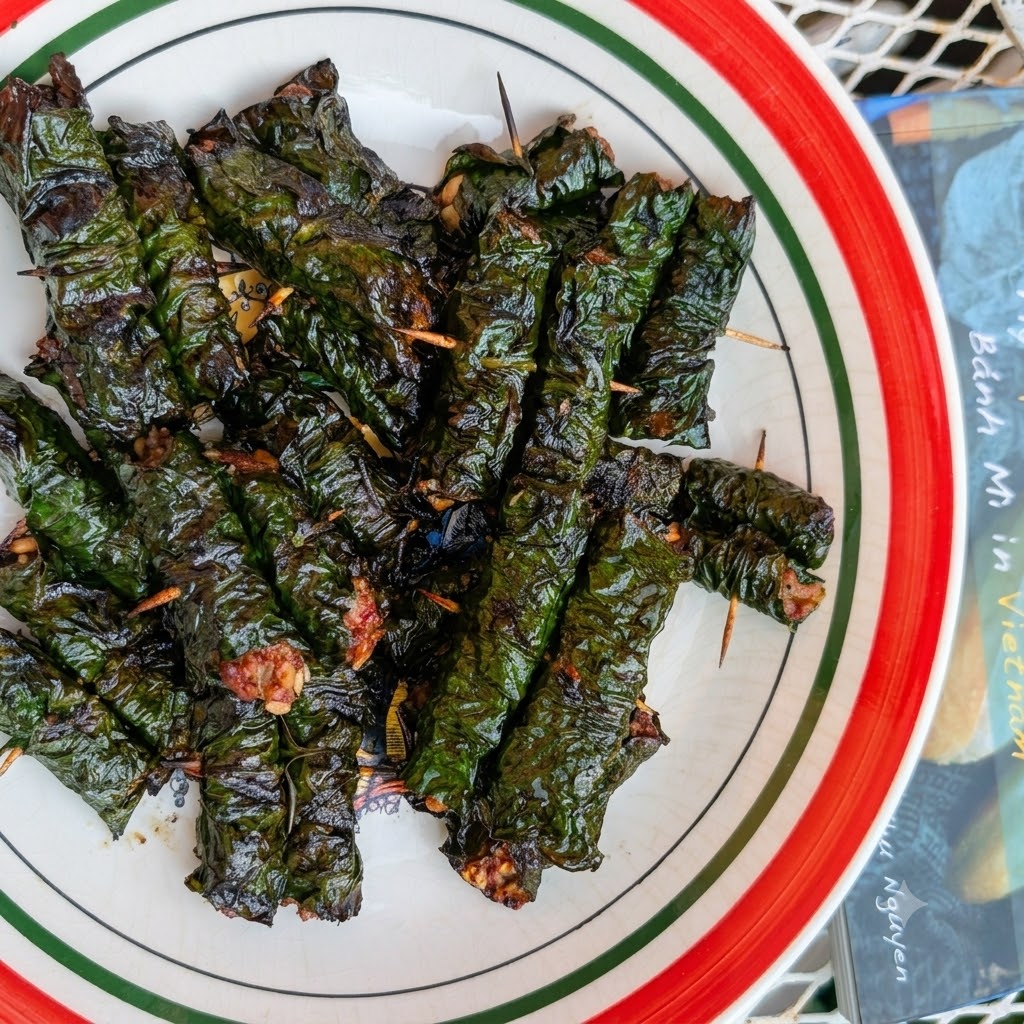
Bò Lá Lốt
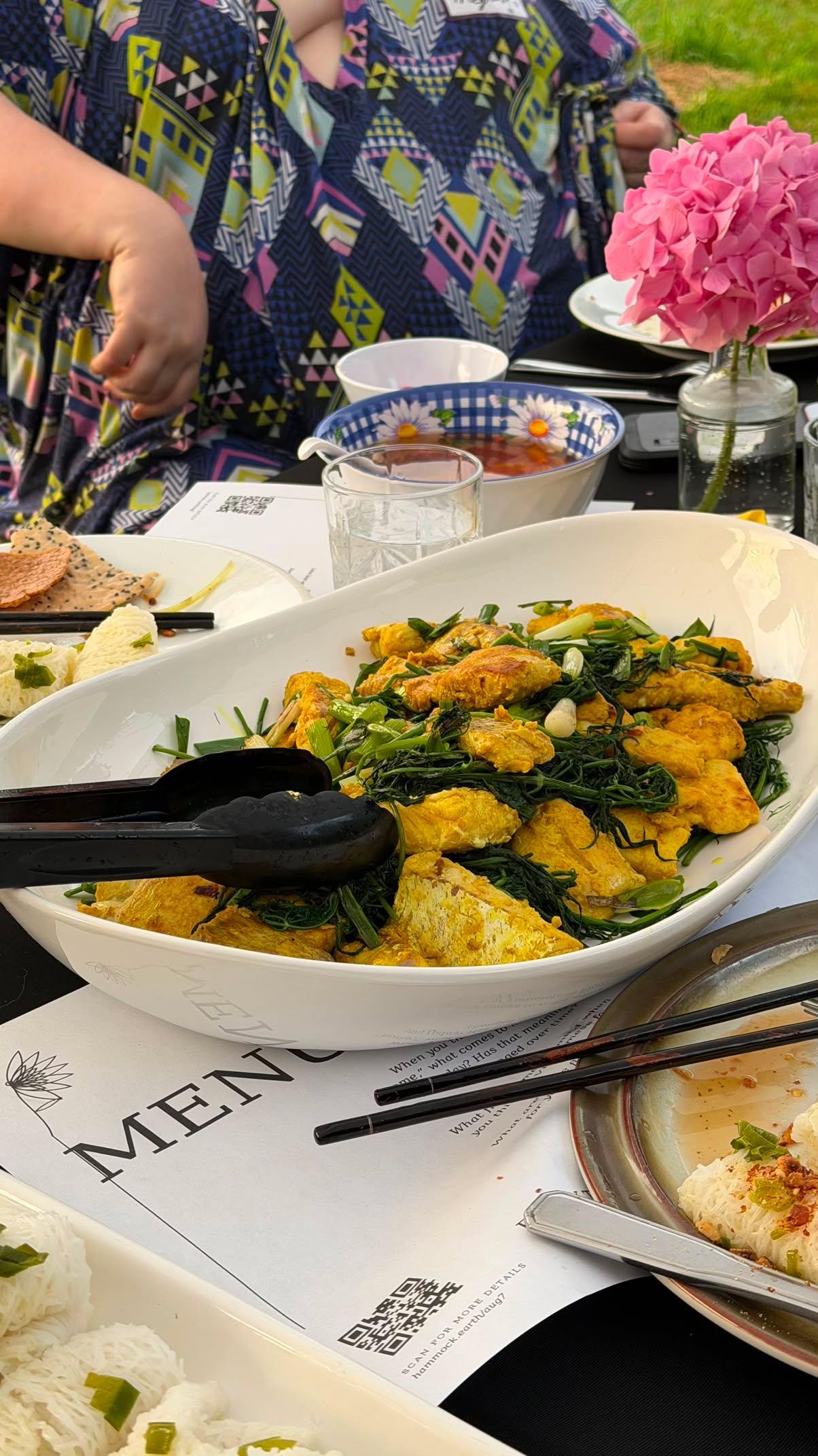
Grilled seasoned beef wrapped in wild betel leaf, charcoal-charred. When grilled, the leaves impart a distinct herbal peppery aroma to the tender juicy beef inside.
Sự Tích · The Story
The betel leaf symbolizes love, fidelity, and devotion in Vietnamese folklore, rooted in the tale of Trầu Cau. Twin brothers Tân and Lang were inseparable until Tân married a woman named Lưu, who could never tell them apart. Feeling forgotten, Lang wandered off in grief and as he died, he became a limestone rock beside a river. Tân searched for him, found the rock, and died there too, transformed into an areca palm tree. Lưu followed her husband's path last of all and became a betel vine, winding around the tree to stay close to him forever. When King Hùng Vương heard their story, he decreed that areca nut, betel leaf, and crushed lime be chewed together, a mixture that turns saliva blood red, a symbol of unity still folded into Vietnamese weddings and the old custom of welcoming guests.
Alone, each ingredient is harsh: the nut bitter, the leaf pungent, the lime caustic. Combined and chewed, they turn warm and sweet in the mouth. It reflects a value at the heart of Vietnamese tradition: real harmony takes compromise, and families become inseparable only by setting aside grief and misunderstanding.
Sức Khỏe · Health Benefits
Lá lốt is a traditional medicinal and culinary herb packed with essential oils, alkaloids, and beta-caryophyllene. It's anti-inflammatory, stimulates digestion, soothes respiratory issues, and reduces excessive sweating.
A note: the story shared above is not actually about the leaf we're eating tonight, but a very different plant with a different Vietnamese name, trầu. They both happen to be translated as "betel leaf" in English. We left the story here anyway, because tonight's dinner is all about examining the stories from our ancestors, our interpretations and misunderstandings, and what they teach us.